
WFA Media Initiative
Guarding Hearts from Harmful Media
Wiqayah Family Alliance equips Muslim families to navigate movies, shows, music, games, and online entertainment with īmān, mercy, and wisdom. We advance a prevention-first approach—prioritizing delay, limits, and purposeful choices—so children’s fitrah, character, and learning can thrive. Through parent training, youth programs, community pledges, and chapter support, we translate prophetic guidance into practical routines: screen-light homes, mindful entertainment, and adab in what we watch, hear, and share. In shā’ Allāh, we aim to partner with masājid, schools, and community organizations to promote value-aligned media standards that reduce pressure on parents and kids. Our goal is not isolation, but guided exposure that keeps hearts present in worship, safe at home, and strong in their Muslim identity.
Community-powered prevention for media-wise, faith-strong families.
8 Reasons We’re Choosing Wiqayah
Research-informed reasons to limit movies, shows, music, and games, and to protect the fitrah of our children.
Heavy Entertainment Media Is Linked to Anxiety, Depression, and Behavior Problems
Studies show that high overall screen-based entertainment (TV, videos, games) is associated with more emotional problems, conduct issues, and hyperactivity in children and teens.
For Muslim kids: when much of their free time is spent in fictional worlds and endless shows, it crowds out salah, Qur’an, family time, and quiet reflection, which are protective for their hearts and mental health.
Night-Time Movies & Shows Disrupt Sleep and Emotional Balance
Watching TV, streaming shows, or videos in the evening—especially in bed—is linked to later bedtimes, shorter sleep, and more sleep difficulties in children and adolescents. Poor sleep, in turn, increases depression, anxiety, and behavior problems and weakens attention at school.
For Muslim kids: this can make it harder to wake for Fajr, focus in class, pay attention in dars, and maintain good akhlāq at home and in the masjid.
Violent Media Increases Aggression and Desensitization
Decades of research show that frequent exposure to violent movies, TV, and video games is linked to more aggressive thoughts, emotions, and behaviors, as well as reduced sensitivity to others’ suffering.
For Muslim kids: this runs directly against our teachings of rahmah, gentleness, and ihsān, and can normalize speech and behavior that contradict the Prophet’s ﷺ example.
Sexualized & Immodest Content Damages Modesty and Self-Image
Many mainstream films, shows, music videos, and even “teen” series are saturated with sexual imagery, immodest dress, casual relationships, and normalizing of zina and haram interactions. Research links exposure to sexualized media to earlier sexual activity, riskier behaviors, and distorted views of relationships and body image.
For Muslim kids: this attacks ḥayā’, ghadd al-baṣar (lowering the gaze), and Islamic sexual ethics, often planting shame, confusion, and secret habits that are hard to talk about.
Music and Lyrics Can Normalize Harmful Values
Studies on youth media show that popular music often glorifies substance use, casual sex, disrespect, and materialism, and that repeated exposure is linked to more acceptance of these behaviors and attitudes.
For Muslim kids: lyrics and beats can bypass the “critical filter,” settling directly in the heart and tongue—normalizing language and themes that oppose dhikr, clean speech, and remembrance of Allah.
Binge-Watching and Endless Feeds Encourage Escapism
Streaming platforms and short-form video apps are designed for binge-watching: autoplay, cliffhangers, and endless recommendations keep children and teens watching far beyond what they planned. Research links such patterns to lower life satisfaction, procrastination, and worse mental health.
For Muslim kids: this can turn screens into an escape from real life—home duties, school work, service, and worship—making it harder to develop sabr, responsibility, and real-world coping skills.
Media Messages Shape Identity and Belonging
Films, shows, and music heavily shape what kids think is “normal”—how friends act, how families talk, what is considered “cool” or “backwards.” When Islamic identity is absent or mocked in media, Muslim children may feel ashamed of their faith or try to hide it.
For Muslim kids: constantly consuming stories where Islam is invisible or stereotyped weakens their sense of belonging as visible Muslims and can increase internal conflict about hijab, salah, and values.
Cutting Back on Entertainment Media Improves Behavior, Connection, and Iman
Research across different types of screen media shows that reducing total entertainment screen time can lead to better sleep, improved behavior, and stronger family relationships. Families who choose more reading, outdoor play, chores, and real-world activities often report calmer children and better communication.
For Muslim kids: less media and more Qur’an, play, nature, family, and community gives their fitrah room to breathe—supporting both dunyā success and dīn stability.
The Wiqayah Pledge
As Muslim families, we stand together to guard our children’s fitrah, īmān, and mental health from the harms of modern media—films, shows, music, games, and online content. The Wiqayah Media Pledge is our shared commitment to prevention with purpose: choosing what nourishes the heart and leaving what harms it.
1. Childhood Before Heavy Media
We commit to protecting childhood from constant exposure to movies, shows, music, and games that distract from play, prayer, Qur’an, and real friendships. In their early years, we choose simple, wholesome, and limited media so our children’s hearts and imaginations can grow on fitrah—not on endless entertainment.
2. No Harmful or Immodest Content
We commit to keeping our children away from media that normalizes immodesty, disrespect, haram relationships, violence, and other values that conflict with Islam. We teach them that their worth comes from Allah, good character, and sincere deeds—not from copying trends, lyrics, or lifestyles they see on screens.
3. Media-Free Spaces of ‘Ilm
We support truly media-free spaces of ‘ilm—especially in our masājid (mosques) and Islamic classrooms—where our children can listen with their hearts, think deeply, and practice adab. We honor our tradition of seeking knowledge with presence and humility by keeping films, music, and casual entertainment out of sacred and learning spaces.
4. Real-World Stories Over Screen Stories
We choose more real-world experiences—reading together, telling true stories from the Qur’an and Sīrah, playing outside, helping at home, serving the community—so screens are not their only “door” to the world. We want courageous, capable, story-rich Muslims, not kids hiding from life inside fictional worlds and endless media.
In Wiqayah Family Alliance, we stand shoulder to shoulder—offering kindness, duʿā, and honest support—so no parent feels alone in protecting their children’s hearts.
Supporting One Another as One Ummah
In Wiqayah Family Alliance, we believe we are not meant to walk this path alone. As Muslim parents in the West, we share the responsibility of supporting one another in this dunyā so that our children are not swept away by unfiltered trends, values, and ideals that contradict their fitrah and their dīn. Together, we create a circle of families who remind each other of Allah, strengthen Islamic identity, and offer real alternatives to the empty distractions of modern culture. By standing side by side—sharing resources, pledges, duʿā, and practical strategies—we work to raise children who feel proud to be Muslim, confident in who they are, and rooted in timeless guidance even as they live and thrive in the modern world.

1. Wiqayah Media Home Starter Guide
A one-page overview of the WFA goals (nA one-page overview of the WFA media goals (protecting childhood from constant entertainment, avoiding harmful/immodest content, media-free masjid and spaces of ʿilm, more real-world stories and activities).
A step-by-step “First 14 Days” plan to reset media rules at home.
Conversation prompts to use with kids:
“Why are we changing our media rules?”
“What kind of shows, games, or music feel good for your heart—and which don’t?”
A simple checklist:
Decide “red zones” (masjid, Qur’an time, family meals, car rides, before bed)
Set family media-free hours
Remove TVs/devices from bedrooms
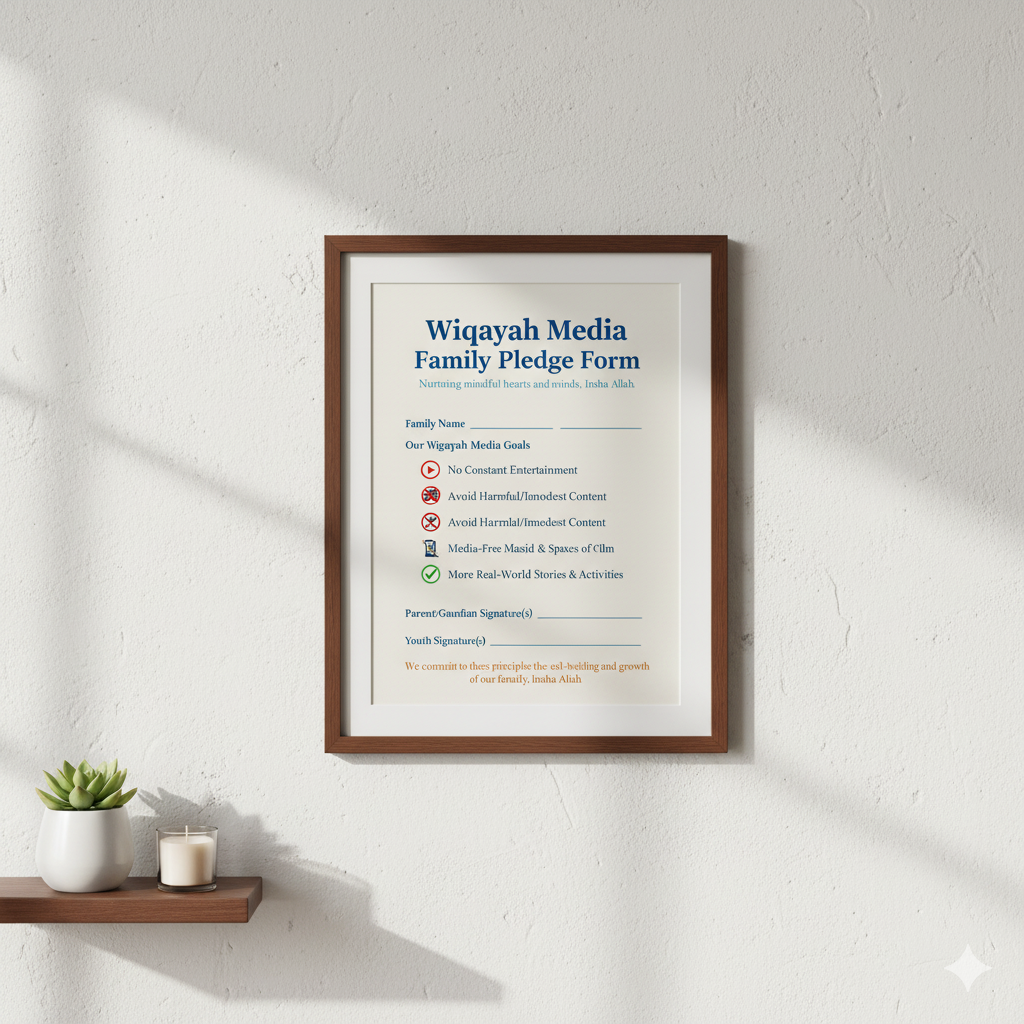
2. Wiqayah Media Family Pledge Form
Space for family name and date.
Clear bullet pledges, e.g.:
- “We will keep entertainment media (films, shows, games, music) out of the prayer area in the masjid.”
- “We will avoid films, shows, and music that conflict with Islamic values of ḥayā’, respect, and tawḥīd.”
- “We will keep TVs and entertainment devices out of bedrooms at night.”
- “We will choose Qur’an, reading, play, or service before watching or listening to entertainment.”
Signature lines for parents and children.
A short duʿā at the bottom asking Allah to protect their hearts from harmful media and fill their time with what pleases Him.
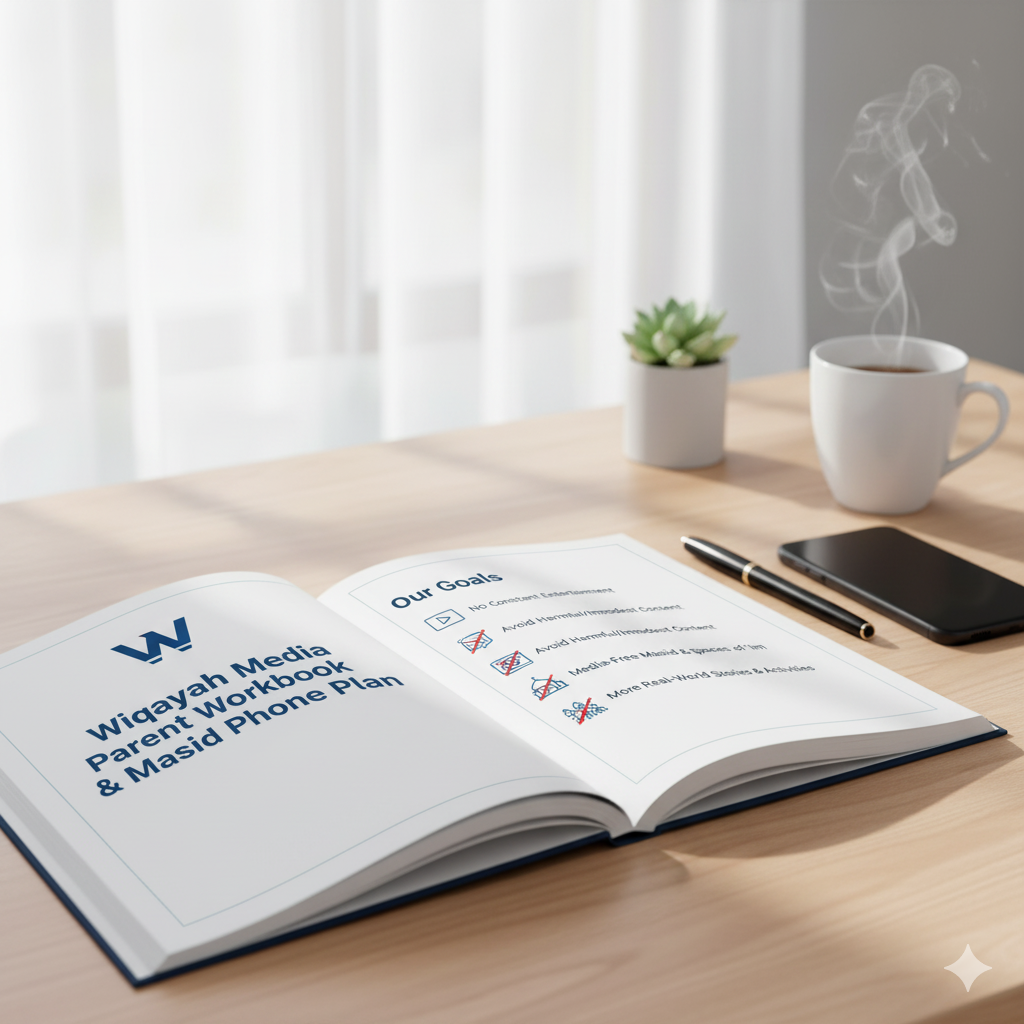
3. Wiqayah Media Parent Workbook & Masjid Phone Plan
Reflection pages:
- “How are films, shows, games, and music affecting my child’s salah, manners, and sleep?”
- “Where do I feel most stuck, worried, or guilty about media in our home?”
A Masjid Media Plan page:
- What types of media are allowed/not allowed in the masjid (no movies, games, music, or casual videos)?
- Where will devices stay during salah/khutbah?
- What offline alternatives will I bring for my kids? (books, dhikr beads, quiet activities, simple notebooks)
Scripts for parents:
How to talk to grandparents/relatives about limiting films, shows, and music while still honoring them and keeping good ties.
How to kindly remind other parents: “We’re trying a media-free masjid for our kids—cutting out games and videos. Would you like to join us?”
How to explain the new rules to kids in a positive, non-shaming way.
Let’s Protect Our Kids’ Hearts: Start a Wiqayah Parent Support Circle
HELP START THE MOVEMENT, in shā’ Allāh
As-salāmu ʿalaykum dear parents,
Many of us feel the same worry: phones, films, music, games, and constant online noise are shaping our children’s hearts, habits, and ideas—often more than we are. We see it in the masjid, at home, in the car, and even at family gatherings. It can feel overwhelming to face this alone.
As part of Wiqayah Family Alliance, we want to start a movement of local parent support groups—small circles of families in each community who come together to:
- Learn about the harms of unchecked phone and media use
- Share practical strategies and resources
- Host short talks and discussions in masājid, schools, and homes
- Offer non-judgmental encouragement, duʿā, and support
But we cannot do this alone.
If you’re willing to help shape this effort—by starting a parent circle, hosting a gathering, or simply being part of the voice that raises awareness—please email mslamialearns@gmail.com with the subject line:
“WIQAYAH PARENT SUPPORT GROUP”
How you can support this movement:
- Start or join a local Wiqayah parent circle in your area
- Host a small talk or discussion at your masjid, school, or home about phones, media, and protecting the fitrah
- Share resources and reminders (flyers, WhatsApp messages, posts) to spread awareness
- Model the change by setting loving limits at home and treating the masjid as a special, screen-free place
Together, with non-judgmental encouragement and kindness, we can build pockets of community where parents feel supported, children feel protected, and our homes and masājid become places where hearts are present, peaceful, and connected to Allah.
Live Lectures
TBA
Live Online
coming soon
TBA
Live Online
coming soon
TBA
Live Online
coming soon
TBA
Live Online
coming soon
WFA Mailing List
Stay in the loop with everything you need to know.
 Ms. Lamia Learns